
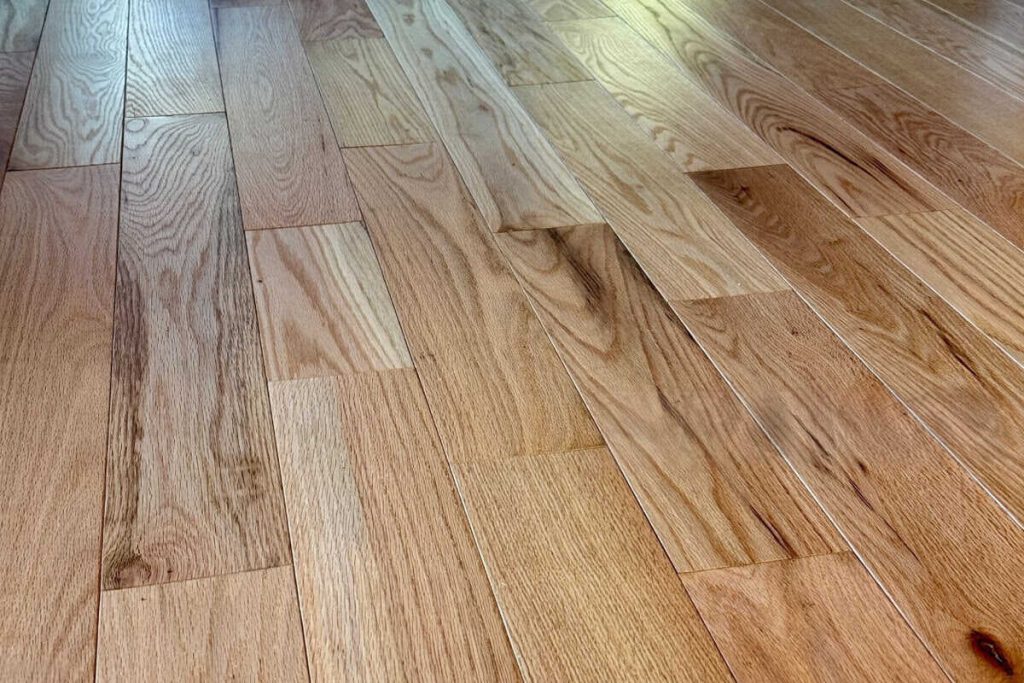
When homeowners ask what cabin grade hardwood flooring is, the shortest honest answer is this: it is usually a lower appearance grade, not automatically a lower-function floor. In plain language, you are buying wood with more visible variation – more knots, stronger colour shifts, more character marks, more short boards, and less consistency from board to board and bundle to bundle.
That distinction matters because people hear “lower grade” and jump straight to “bad quality.” That is usually the wrong first read. Grade, in this context, tells you more about how the floor will look than whether it can work as flooring at all. The real question is not just, “Is it cheaper?” The real question is, “Do I actually want the look and the install reality that come with it?”
That is where the call changes. Cabin grade can mean a floor that feels warm, rustic, natural, and full of character. It can also mean a floor that feels busy, inconsistent, and less appealing once it is installed if you expected something cleaner and more uniform. From what we see on real jobs, the disappointment usually does not come from the wood failing underfoot. It comes from buyers not fully understanding what shows up in the bundles, how much board sorting may be needed, why waste can increase, and how limited blending can be once the material is in the room.
So the high-level verdict is pretty simple: cabin grade hardwood flooring can be a smart buy, or it can disappoint. What decides that is not the label by itself. It is the match between the look, the room, the buyer’s tolerance for variation, and the reality that a lower appearance grade often asks for more flexibility than people expect.
Cabin Grade Hardwood Flooring: What You’re Actually Buying
Before you decide whether cabin grade makes sense, you need a realistic picture of what actually lands on site. This is the part a lot of buyers do not get from a small display board or a polished product photo. The floor in the room is not one attractive sample. It is the full mix, and the accepted visual range within a grade can be much broader than a single sample suggests.
Knots, colour variation, and “character” marks you’ll see
The first thing most people notice in cabin grade is visual activity. You may see more knots, darker and lighter boards sitting right next to each other, more mineral streaks, stronger grain contrast, and a wider spread between the calmest boards and the busiest ones. Some boards look great on their own, while others appear rougher or show stronger character. In many cases, that rustic variation is exactly what some buyers are looking for. Others are the reason the whole floor starts to feel louder than expected.
That does not automatically mean something is wrong. In a lot of cabin-grade lines, those marks are the point. The grade allows more natural variation to stay in the product instead of sorting it out. That is why two boards from the same carton can feel like they came from two different visual groups.
This is also where photos throw people off. We have seen buyers fall for a product online because the images showed a few attractive character boards with nice balance. Then the shipment arrived and the actual mix was much more uneven – more knots grouped together, sharper tone jumps, and more boards that looked “busy” than the photos suggested. The floor was still doing exactly what that grade often does. The expectations were the problem.
Lengths, sorting, and why bundles feel inconsistent
The second surprise is usually board length. Cabin grade often includes more short boards and a less predictable length mix. That changes the finished look right away. More short boards mean more end joints, more visual breaks, and more chances for one area of the room to feel chopped up if the layout is not handled carefully.
That is also why bundles can feel inconsistent. One carton may have a workable blend of shorter and longer boards. The next may lean much harder into short pieces or stronger colour swings. That does not always mean the supplier sent the wrong product. A lot of the time, it reflects the manufacturer-defined appearance guidelines for that grade.
From a homeowner’s side, what matters is not whether short boards are “allowed.” What matters is how the room reads once everything is spread out. A floor with mixed lengths can look natural and intentional in the right setting. It can also look restless when the buyer had a cleaner rhythm in mind.
That is where sorting time enters the conversation. Even on a sound product, somebody has to decide where the busiest boards go, where short pieces collect, and how to keep one corner from turning into a knot-heavy or dark-heavy patch. People tend to focus on price per square foot and forget that time spent managing the visual mix is part of the real cost.
Grade vs quality: what it does and doesn’t tell you
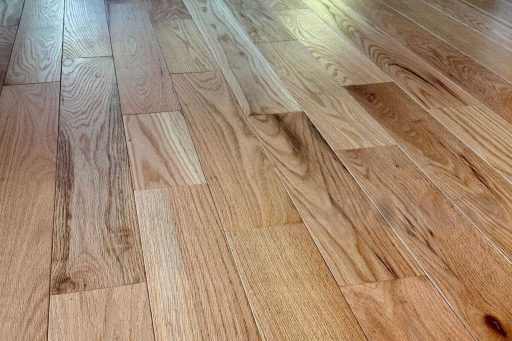
This is the part where I would usually slow down a bit: grade is not the same thing as quality in the broad way homeowners use that word. If someone says, “I want good-quality hardwood,” they may mean durability, stability, longevity, or just a floor that looks clean and expensive. Cabin grade does not answer all of those questions by itself.
What it does tell you, most of the time, is that the material has a wider visual range. It tells you to expect more character and less uniformity. It may also signal more variability in bundle feel and more need for selection during installation. What it does not automatically tell you is that the floor will fail, move differently from wood in general, or perform poorly just because it has more visible character.
That said, the grade label is not a free pass either. You still want to know what the supplier considers acceptable, what the manufacturer’s grade description actually allows, and where the line sits between normal cabin-grade variation and boards that are truly unusable. That is why it helps to understand grades of hardwood flooring before you assume the label tells the whole story.
A lot of the confusion comes from buyers trying to turn one word – “grade” – into a full verdict. In real life, cabin grade tells you this first: expect a stronger visual mix. Everything else depends on the actual product, the space, and whether that look works for the project.
| Appearance trait or buying reality | What it usually means | What to confirm |
|---|---|---|
| Heavy knots and character marks | More natural variation left in the product | Whether open or filled knots are allowed |
| Strong colour swings between boards | Lower appearance sorting, not automatic failure | How wide the normal colour range is |
| Many short boards | More visual breaks and more layout management | Typical length distribution in real bundles |
| Photos look cleaner than real deliveries | Marketing images may show the best mix | Ask for a real sample mix across multiple boards |
| Lower sticker price | Savings may be real, but not complete | Waste allowance, sorting time, and return rules |
Where Cabin Grade Makes Sense (And Where It Doesn’t)
Cabin grade works best when the space can carry a more natural, varied look without feeling like something went wrong. Rustic interiors are the obvious fit, but not the only one. It can also make sense in secondary spaces, casual homes, retreats, or projects where visible character feels warm rather than messy. In those settings, knots, tone shifts, and mixed lengths usually read as part of the design instead of a compromise.
It can also be the right call for buyers who genuinely like variation. That part matters. Not “I can live with it because it is cheaper.” I mean people who actually want a floor with movement, marks, and a less uniform field. When that expectation is real, cabin grade can feel honest and attractive.
Where it usually does not fit is in spaces where visual calm is the goal. If the room wants long, clean visual lines, even tone, and a more controlled floor field, cabin grade is usually the wrong material to force into that job. Open-concept areas can make this more obvious because you see more of the floor at once. What looked charming on a small sample can start to feel scattered across a large room.
This is also where the “busy look” versus “defect” boundary matters. A floor can look busier than expected and still be within grade. That does not make the buyer wrong for disliking it. It just means the problem is fit, not necessarily product failure. Our crews run into this a lot: cabin-grade floors that perform fine physically and still frustrate homeowners because they wanted uniformity the grade was never likely to deliver.
So the question is not “Can cabin grade be used here?” The better question is “Will this room and this homeowner read the variation as character, or as visual noise?”
Performance Expectations: What Changes and What Doesn’t
Cabin grade changes appearance expectations much more than it changes the basic nature of wood flooring. If the product itself is sound, wood is still wood. Species-driven traits still matter. Seasonal movement still matters. Acclimation still matters. The floor does not stop being subject to normal wood behavior just because it carries a different appearance grade. If you need background on that side of the conversation, hardwood floor acclimation helps frame why movement reality stays the same.
What usually changes in lived experience is the visual side. Repairs may be harder to make disappear cleanly because the floor already has more pattern and variation to read around. Spot blending expectations also need to stay realistic. A busy floor can sometimes hide certain changes better, but it can also make matching feel less predictable because there is no single calm baseline to work from.
Prefinished versus unfinished also matters here, but only in the way homeowners actually notice it. A prefinished cabin-grade floor arrives with its look largely baked in. An unfinished one may give more room to shape the final appearance through sanding and finishing, but it does not erase the grade’s natural variation. You are still starting with a more mixed visual product.
That is the right mindset: cabin grade does not automatically mean worse floor behavior. It means different appearance expectations, less visual consistency, and less room to pretend the material is something cleaner than it is.
Install Reality: Waste, Selection Time, and Blending Limits
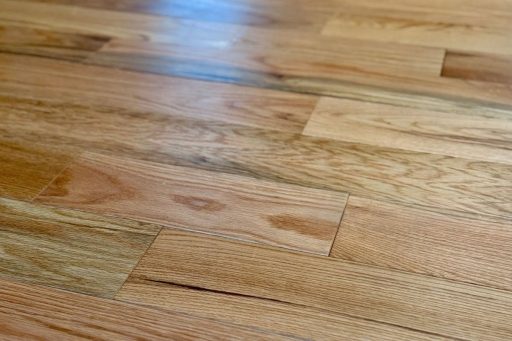
This is where a lot of cabin-grade decisions get more expensive than they looked on paper. Not because the installer is doing something extra for fun, but because a more variable product usually takes more time to manage. Someone has to open bundles, read the mix, spread out the heavy character, keep short boards from clustering too hard, and decide where the strongest contrast belongs.
That sorting time is real cost. Even when the job goes smoothly, it is still part of what the floor asks for. Homeowners are often surprised by this because they assume lower grade means “same install, lower material cost.” In practice, the install side may get slower, not faster.
Waste planning matters for the same reason. Some boards may be structurally usable but visually wrong for the layout the buyer wants. That does not mean the material is defective. It means the expectations have pushed the project into more culling and more selective use. When buyers do not plan for that, frustration shows up fast.
Then there are blending limits. A good installer can help distribute variation. A good installer cannot make cabin grade look like a cleaner grade. That is the line people need to hear early. We can improve balance. We cannot erase the character profile of the material. Once you understand that, the decision gets a lot clearer: either you accept the visual spread as part of the product, or you choose a different grade.
Buying Checklist: What to Confirm Before You Commit
Most of the avoidable problems with cabin grade happen before installation starts. The material did not lie. The buyer just did not pin down what “acceptable” meant early enough. That is why this part matters more than people think.
Ask for a real sample mix (not a “best boards” photo)
Do not buy cabin grade off one pretty board or one polished photo. Ask to see a real sample mix made from multiple boards, ideally from more than one bundle. You want the average truth, not the nicest version of the truth.
This matters because cabin grade is not defined by the best board in the lot. It is defined by the full spread. The image that sold you may show a balanced mix of knots and tone shifts. The actual shipment may lean much harder into one side of that range. This is where a lot of frustration starts. The homeowner says, “This is not what I thought I bought,” and the supplier says, “This is within grade.” Both statements can be true at the same time.
A real sample mix closes that gap. It helps you judge the floor the way it will actually live in the room: not as one appealing board, but as a field of many different boards working together.
Confirm allowable defects and return rules
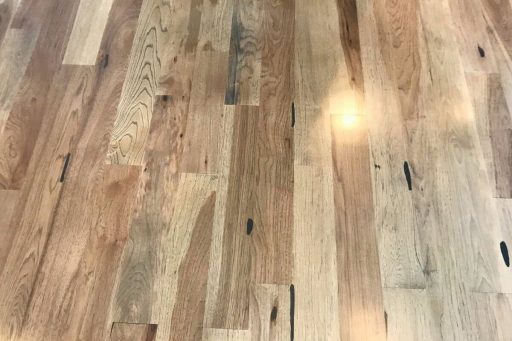
The next step is getting clear on what the seller considers normal for the grade. That means asking direct questions. Are open knots allowed, or only filled knots? How much colour spread is considered normal? How much short-board content is common? What counts as unacceptable?
This is where people get into trouble with vague language. “Rustic.” “Full of character.” “Natural variation.” Those phrases are not wrong, but they are too soft to protect a buying decision on their own. You want the actual grade description in writing, and you want to know where the return line sits if the product feels more extreme than expected.
Return rules matter more on lower appearance grades because once bundles are opened and the real mix becomes visible, your options may narrow. Some products are much harder to return after partial inspection or partial installation. That means you need to know the rules before the material is on the floor, not after the room starts to read too busy.
Plan waste and sorting time up front
This is the part buyers skip when they focus only on the material price. Cabin grade may save money at the front end, but that does not mean it will save money once the layout and selection reality sets in.
Plan for waste honestly. Not because every extra board is “bad,” but because you may reject some pieces for visual placement reasons. Plan for sorting time too. If your expectation is a balanced result, somebody has to spend time getting there.
That is also the time to align expectations with the installer. Are you okay with stronger variation across the room, or are you hoping the floor will somehow calm down once it is laid? Those are different mindsets, and they lead to very different levels of satisfaction.
A simple way to think about it is this:
| Buying risk | Why it happens | How to avoid it |
|---|---|---|
| The delivered floor looks busier than expected | Buyer relied on curated photos or one display board | Ask for a real sample mix across multiple boards |
| Too many strong-character boards in one area | Variation was not understood before layout began | Confirm the visual range and discuss expectations early |
| Savings disappear during installation | Sorting time and waste were not included in the decision | Plan extra handling time and realistic overage |
| Return becomes difficult | Real product mix was discovered only after opening bundles | Confirm return rules before purchase |
| Buyer thinks “lower grade” means “bad floor” | Grade was treated as a full quality verdict | Separate appearance grade from product soundness |
If you handle these three checkpoints well – sample mix, allowable variation, and planning for waste and sorting – most cabin-grade surprises stop being surprises.
Price vs Value: When It’s a Smart Buy
Cabin grade becomes a smart buy when three things line up: the space suits the look, the buyer actually accepts the variation, and the install reality has been counted honestly. When those pieces line up, the lower price can represent real value. You are not paying for a cleaner appearance grade you never wanted in the first place.
Where it turns into false economy is when the buyer is chasing the price while quietly hoping for a more uniform floor. That is where returns, second thoughts, extra sorting time, and waste start eating away at the savings. The material may still be doing what cabin grade does. The problem is that the decision was made on cost first and fit second.
That is why I would not frame cabin grade as “good” or “bad.” Better to frame it as matched or mismatched. Matched to the space, it can feel natural and worth it. Mismatched to the room or the buyer’s eye, it can feel like compromise from day one.
So the smart-buy question is not “How much cheaper is it?” The better question is “Would I still choose this if I saw the full mix, understood the sorting and waste reality, and knew the floor would stay visually active once installed?” If the answer is yes, the value case is usually solid. If the answer is no, it is not the right place to save.
Cabin Grade Hardwood Flooring in One Sentence
Start with the definition: cabin grade usually means a lower appearance grade with more visible variation, not an automatic verdict on whether the floor can function well. Then set expectations around what you will actually receive – knots, tone shifts, character marks, mixed lengths, and less consistency from bundle to bundle. From there, decide whether that look fits the room and your tolerance for visual activity. After that, confirm the limits: how much variation is allowed, what the return rules are, and how much sorting time and waste may come with the product. Then make the value call based on the whole picture, not just the sticker price.
If you want a character-driven floor and you are planning for the reality that comes with it, cabin grade can work. If you want visual calm and tight consistency, move up the ladder.
That is cabin grade hardwood flooring.